|
Prebiotic chemistry within a simple impacting icy mixture
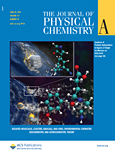
N. Goldman, I. Tamblyn Journal of Physical Chemistry A, 117, 24, 5124-5131 (2013) Using quantum molecular dynamics simulations extended to near-equilibrium time scales, this work investigates the synthesis of prebiotic organic compounds in shock-compressed icy mixtures, motivated by the possibility that comet or icy body impacts delivered the chemical building blocks of life to early Earth. At moderate shock pressures and temperatures (36 GPa, 2800 K) within a CO2-rich icy mixture, the simulations produce nitrogen-containing heterocycles that dissociate to form functionalized aromatic hydrocarbons upon expansion and cooling to ambient conditions. At higher shock conditions (48-60 GPa, 3700-4800 K), long carbon-chain molecules, methane, and formaldehyde are synthesized. All shock compression simulations produce significant quantities of simple C-N bonded compounds such as HCN, HNC, and HNCO upon expansion. These results demonstrate a viable mechanism for impact-driven prebiotic chemistry requiring no external catalysts, UV radiation, or specific planetary conditions. This was a Cover Article and received major news coverage in The New Yorker, National Geographic, LiveScience, and other outlets. |